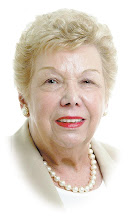
Lynn Haney kind of reminds us of Audrey Hepburn in Sabrina

Sometimes you meet someone briefly, but have an immediate desire to better know that person.

I think that anyone hearing Lynn Haney as a speaker would have that reaction, because she is so interesting and has led such an unusual life. But for me, there was an added sense of coming across a kindred spirit, so we arranged to meet for coffee in Guilford and ended up spending most of the afternoon together.

The one thread that runs throughout this 70-plus-year-old woman’s remarkable life is her willingness to take a chance; her guiding principle seems to be — leap and the net will appear.

Haney grew up in Pittsburgh, the youngest of four girls. Her mother had been a campus queen and model, and married a man 17 years her senior who held a responsible position for the city of Pittsburgh.

She attended the University of Pittsburgh, majoring in creative writing. She recalled a defining moment upon graduating, when a girlfriend remarked, “Lynn, if we don’t get married now, we’ll have to face life.”

Haney decided she was not ready to “face life,” but was, instead, going to Paris. Taking a teaching job at a private girls school in order to earn money for the trip, she also placed ads as an English tutor in the international edition of the Herald Tribune. When no responses were forthcoming, she left for Paris anyway and arrived there, unemployed, with $540 in savings.

She found reasonable digs in the dormitories at the Alliance Francaise and decided, since she had watched her mother model, to interview for a position at the couturier Jean Patou.

Despite only a smattering of high school French, she was hired to announce the summer fashion shows. Quickly dismissed from that position when it was discovered that her accent was so poor that nobody could understand her commentary, she went, undaunted, to Dior where she became an assistant saleswoman and was popular with the many wealthy, English-speaking buyers.

Eventually, her French improved, and she ended up at Lanvin, again as a model, but her career was “rear ended” when, although she was model thin, her young body matured and she developed a more fulsome and typically American “behind,” which did not fit the narrow French fashions.

Haney lived in Paris from 1963 to 1965, but then she met and fell in love with an American from Washington, D.C. Before taking the leap to leave Paris and follow him to Washington, she wisely obtained a letter of introduction to a person of influence at the White House from the consul general in Paris. Continued...


12See Full Story
Once again, the “net” appeared; this time in the form of the newly organized Endowment for the Arts, where she worked in the public relations department for 2½ years. Upon leaving Washington and coming to New York, she was hired as a news assistant for The New York Times.

She met her first husband, a fellow writer, in a writing room at the New York library and moved to Stonington, where she wrote the first of, to date, 12 books.

Her second husband occasioned a move back to Washington, but eventually to Guilford where she has lived for the past 15 years, enjoying her latest life leap as a speaker, writer and writing coach.

Lynn Haney is a shining example of a stimulating, engaged, adventuresome individual who embodies the philosophy of “age is a number, not a destination.” She can be reached at lynnthaney@gmail.com.

- Article by Jean Cherni, founder of the retirement advisory service, Senior Living Solutions. Contact her at jeancherni@sbcglobal.net or 15 The Ponds at Hotchkiss Grove, Branford 06405.

On this sunny afternoon, our conversation was all about hospice

Sometimes we think we know everything about something, but we find that we really didn’t ... that, indeed, we misunderstood many facts about a particular subject.

That may be the case about hospice and hospice care, even though Connecticut was the birthplace of the hospice movement in America, and we still set the standard for hospice home and inpatient care and nursing.

On a recent sunny afternoon, I sat in the dining room of the Connecticut Hospice on Double Beach Road in Branford, taking in the breathtaking view while chatting with Lauren Brown, director of clinical support services; Katherine Blossom, the arts director; and Soozi Flannigan, director of hospice.

They explained that hospice is actually a whole, unique philosophy of caring that looks at a patient’s psychological, spiritual, emotional and physical needs as well as the family dynamics, with respect for cultural, ethnic and religious differences.

The hospice philosophy of care actually began in the 17th century when hospice was a place of shelter and rest for weary or ill travelers on a long journey, but modern principles were pioneered in the 1950s by Dame Cicely Saunders, who taught that the focus should be on the patient, rather than on the disease.

The first American hospice home-care program began in 1974 in New Haven as the Connecticut Hospice. When home care was not sufficient to meet the needs of patients, Connecticut Hospice opened the nation’s first hospice hospital in Branford in 1980.

Local home-care offices are in Branford, Norwalk, Shelton and Wallingford. The hospice idea has bloomed in Africa, Poland, Japan, Italy, Spain and many other countries.

One of the programs offered by Connecticut Hospice is Can Support. Many people are unaware that this program is available with no restrictions due to the length of anticipated illness. There must be a diagnosis of a progressive illness, a general inability to leave home and a skilled nursing need. Can Support can then provide medical and nursing care, social work, arts therapies, spiritual care and physical therapy.

No one needing care is ever turned away for inability to pay. In the Inpatient Advanced Palliative Care Hospice Hospital, a patient who remains stable or improves may be discharged to return to their home or to another facility. This occurs about 25 percent of the time.

Hospice care takes an interdisciplinary approach with everyone involved in the care of the patient, meeting and coordinating their efforts. Families also have an important role to play and Connecticut Hospice offers monthly wellness groups where families and patients are able to enjoy a variety of complementary therapies together. Continued...


12See Full Story
Hospice also offers bereavement counseling for 13 months for family members who have lost a loved one.

Of course, volunteers play a tremendously important role. People who can connect, help in patient care or act as companions are encouraged to volunteer; others serve by offering art and music activities, doing shopping, driving, gardening or office work.

All volunteers receive two-hour, one-day-a-week training which lasts for six weeks. To help to enhance the quality of someone’s life as long as life lasts, is the goal of hospice and surely one of the most rewarding ways to volunteer. To learn about volunteer opportunities or to receive additional information, go to www.hospice.com, www.artsathospice.com or call 203-315-7510.

- Article by Jean Cherni, founder of the retirement advisory service, Senior Living Solutions. Contact her at jeancherni@sbcglobal.net or 15 The Ponds at Hotchkiss Grove, Branford 06405.

Achoo, achoo, achoo, and please pass the tissues

This past week, I was laid low by one of the worst colds I’ve had in years, and after trying to work despite constant sneezing, runny eyes and nose, no energy and, in general, looking, as my mother used to say, “like something the cat dragged in,” I belatedly started to do some research on how to stay healthy this winter.

I also was able to arrange a telephone interview with Carolyn Harrington, a certified holistic health practitioner and founder of Maty’s Health Products, a line of all-natural products.

Carolyn developed her now-successful product line when, in 1966, her third child, Maty, was born with severe heart defects and had no spleen. By age 5, Maty had undergone three complex surgeries, correcting her heart problem, but leaving her with difficult medical issues and a weakened immune system.

Desperate to help her little girl, Carolyn devoted her time and considerable energy to finding natural remedies to help Maty become healthy.

Several of her line of all-natural products are especially for children, but there is also a vapor rub and natural nighttime nasal ointment and cough syrup, good for all ages.

Now, well-known and popular, her gluten-free, all-natural products are carried by Big Y, Stop & Shop, Rite Aid and online at www.matyshp.com.

Carolyn is from Rochester, N.Y., where winters are long and hard, and here’s her advice on staying healthy when temperatures drop: Take an extra vitamin D3 supplement; most of us need 5,000 units a day and don’t get nearly enough. It can also act as an anti-depressant. Stay away from sugar, soft drinks and chocolate.

Use sugar substitutes such as stevia. Herbal teas are excellent, especially peppermint and ginger. If you can stand the taste, drink some apple cider vinegar (add honey, to sweeten) for its anti-bacterial properties.

Although Carolyn is not a vegetarian, she does try to eat something raw every day and adds garlic, oregano and turmeric to many of her dishes.

Some additional tips from other medical sources suggest:

Get to bed earlier. Even if you just rest, it gives your body an extra immune boost.

Drink plenty of water. Central heating is very dehydrating. Our bodies need 8 ounces every two hours and double that upon arising and going to bed.

Eat hot foods; hot cereals like oatmeal; soups and stews, instead of sandwiches and salads. Especially good veggies are carrots, beets and squash. Homemade chicken soup is still a favorite with everyone.

Bundle up, but get outside and exercise.

Wash hands often and carry antiseptic wipes with you.

Use a humidifier or vaporizer at night.

Some experts feel the verdict is out on herbal remedies, so check with your physician first. Some herbal remedies can interfere with medicines you are already taking.

I’m going to start doing all of those things tomorrow. Right now, I’m taking my favorite pillow, putting on my warmest cuddly robe, and with my box of Kleenex, nose spray, cough syrup, lemon and honey hot tea, I’m getting under my fluffy winter comforter to watch a good movie.

None of the experts mentioned it, but Liam Neeson or George Clooney always seem to make me feel better.

- Article by Jean Cherni, founder of the retirement advisory service, Senior Living Solutions. Contact her at jeancherni@sbcglobal.net or 15 The Ponds at Hotchkiss Grove, Branford 06405.

This is not your garden-variety volunteer opportunity

Some of the most important but little-heralded volunteer work is done by those who work with the Connecticut Department of Corrections and serve in a variety of programs which help prison inmates.

As a result of their efforts, the number of inmates in our prisons has dropped by several thousand, despite the slow economic times.

Like most of us, I hadn’t really known or even thought much about what happens to those who are incarcerated until I happened to chat with Fran Acquarulo, a gentle, soft-spoken senior in my exercise swim class.

When I inquired what she enjoyed doing in her spare time, she began to tell me about her volunteer work in the prisons. I became so intrigued that I made an appointment with Doug Kulmacz, director of Volunteer and Recreation Services.

Their sprawling complex in Wethersfield resembles the Pentagon in Washington, but after being buzzed through several doors and checked by security, I found the inside offices light and cheerful, and Mr. Kulmacz himself, bubbling over with energy and enthusiasm.

The many different programs they have developed teach inmates skills that they hope will create a “pro-social” product that someday will result in a successful re-entry into society.

“In a sense, we are building people,” explains Kulmacz. “We need to work to reduce recidivism” (a return to prison).

Currently, 10,000 inmates, approximately half the state’s inmate population, participate on a monthly basis in recovery, rehabilitation or pre-release services provided by volunteers. The programs are only available to those inmates who follow the rules and who want to do something with their lives.

Volunteers may participate in many ways. They may facilitate alcoholics-, narcotics- or gamblers-anonymous meetings; teach drama or music classes; provide clerical assistance; coordinate recreational activities; or act as religious mentors.

Those who speak, read or write a language other than English are especially needed, and all volunteers can serve in a wide variety of locations. Volunteers can help prison inmates learn to make important and constructive changes in their lives. Continued...


12See Full Story
They are a special link between the inmate and the community, and they bring a sense of “normalcy” to the correctional setting.

The contribution of the volunteer places a responsibility on the offender to become focused and motivated, and it also can provide him or her with a sense of hope for the future.

Volunteers help prepare inmates for the general equivalency diploma exam, organize sports and recreational activities and support the families and children who are dealing with the problems of having a loved one confined.

There is a training and orientation program as well as a 5-hour, in-service, refresher course each year.

Volunteers are also instructed about the importance of confidentiality and discretion. I was able to view some fascinating inmate art work, a result of the artists-in-residence program.

There are also opportunities in the community working with parole officers, halfway houses and other facilities which help those returning to community life.

While there is a wide variety of opportunities, this kind of volunteer work is not for the impatient or the easily discouraged.

It takes a strong commitment and a belief in the eventual power of love and caring. In the front of the volunteer handbook, there is a quote of Winston Churchill: “We make a living by what we get, but we make a life by what we give.”

To find out more about volunteer opportunities, call Doug Kulmacz at 860-692-7580

- Article by Jean Cherni, founder of the retirement advisory service, Senior Living Solutions. Contact her at jeancherni@sbcglobal.net or 15 The Ponds at Hotchkiss Grove, Branford 06405.