“Happiness doesn’t depend on how much you have to enjoy, but how much you enjoy what you have.” — Tom Wilson
Talk about poetic justice! Here I am, the de-clutter expert who helps others who are planning to dispose of too many possessions, deep in the recesses of my enormous basement, surrounded by a 20-year hoard of unnecessary stuff.
I have been talking aloud to my recently departed husband, Val, accusing him of saving every piece of paper since he was in third grade. In all honesty, however, he never wore those size 10 women’s clothes and even my own memory is dim as to what year it was when I last fitted into anything less than a size 16.
The trouble with basements is that they are the perfect excuse to procrastinate; to say, in effect, “I’ll think about this later. After all, maybe, I’ll need it someday.”
Well, dear reader, my “some day” has come and gone, and I am now applying my own good-riddance rules with a vengeance. For those of you inspired by the advent of spring to join me in my throw-out marathon, here are some helpful hints:
First, recognize that clutter is anything you don’t use, want or love — often, items labeled “miscellaneous” and lacking a place or purpose.
Walk around your house and make a list of everything you see that you really don’t need. Now, open drawers and do the same thing.
Picture, in your mind, how each room could look without the extra clutter. Getting rid of clutter also eliminates much cleaning.
Questions to ask yourself:
1. How long has it been since I used this? Continued...
123See Full Story
2. Do I have more than one of this item? (Especially in the kitchen)
3. Do I need and enjoy this regularly?
4. Is this in good condition? Would it be cheaper to fix or replace it?
5. Are there unfinished projects? Set a deadline for completion, or say good-bye.
When it comes to closets, beware of fancy organizers. Sometimes all they accomplish is to help us neatly store what we don’t really need.
As for clothes, if it looks better on the hanger than it does on you, out it goes.
Sentimental clutter can be the hardest to bid farewell. Grandmother’s china, your children’s schoolwork, vacation mementos, cards and photos from high school friends. Sometimes, you can keep a sampling; one or two items beautifully arranged or displayed will offer more meaning and pleasure.
You’ll want to save the sentimental stuff for last because each card, each photo, each beloved item will have to be read, talked about, admired, etc., and departure depression sets in.
Part of the problem for those of you in my age group (over 50 ... way over) is we grew up in a period of “wear it out, use it up, make it do,” so we hate to throw away anything. But that was a period when we had very few things, so we were savers and keepers out of necessity.
We all feel better when we can turn our unwanted items into good deeds. Consignment shops and thrift shops are always looking for attractive furniture and clothes, and donations are tax deductible. Charities and international organizations often have drives for specific items. Continued...
Charlies Closet in Guilford (203-453-8359) accepts all kinds of used medical equipment and health aids. Half-price bookstores exist around New Haven, and your professional clothing can make a big difference for someone looking for a job.
Be sure to give yourself a little treat after a successful good-riddance session.
Keep in mind that the past is to learn from, not to live in.
On a personal note: I thank the many readers who emailed and wrote to me after my Feb. 26 column. I hope to answer all of you, individually, but it will take some time. Meanwhile, know that your thoughtful caring has helped immeasurably.
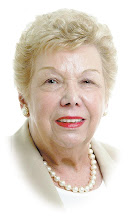
- Article by Jean Cherni, founder of the retirement advisory service, Senior Living Solutions. Contact her at jeancherni@sbcglobal.net or 15 The Ponds at Hotchkiss Grove, Branford 06405.
I'm down in the basement with all the stuff that should have been tossed years ago
Every candidate knows that the average adult attention span is 22 seconds
As a former political science major, I am a great believer in, and compulsive watcher of, political discussions and debates. But after some 22 Republican candidate debates, even I have grown weary. Forget the costs, which must be more than the yearly budget of many small Latin American countries; despite an almost quiz show-like suspense with rotating “winners” of each debate, as yet, I haven’t heard any realistic solutions to our country’s serious problems.
Some of the debates have called to mind that very old television program where a panel of experts tried to determine the “real Mr. So-and-so” from a group of other contestants with false identities. The Republicans, in a similar manner, have been searching for the “real conservative” candidate.
The ensuing back-and-forth between candidates with the “he said” and the, “what I really meant was” has served as a reminder to me of the importance of two skills which I fear are both declining: clarity of speech which involves choosing the right word to express your thoughts and the art of truly listening.
Words are powerful tools, and unfortunately texting and the use of computers, iPads and other devices does not encourage us to take the time to search for the word that best expresses precisely what we wish to convey. Sometimes, complex problems can’t be expressed briefly; but most of the time, we don’t really require a great many words to express our meaning; but we do need the best, specific choice of words to avoid being misunderstood.
Mark Twain, who could give a master class in brevity, said, “The difference between the right word and the almost-right word is the difference between lightning and a lightning bug.” One of the smallest but most powerful words in any language is the word, “if.”
Listening ... really openly listening means not only being free of other distractions, but also trying to momentarily suspend our own preconceived ideas and prejudices and view a new idea or thought from the speaker’s perspective.
I find this the hardest of the two skills to cultivate. As a writer, I am always conscious of trying to choose the most precise word to express my feelings. I often fail, however, to be a good listener. I have strong opinions on subjects that I feel passionate about and too often fail to really try to see things from a different perspective. We all make the mistake of confusing information with knowledge, but knowledge is the interpretation of information. That can only occur when we really listen.
The most common complaint between married couples is often, “You’re not listening to me!” When someone is upset, we are in such a hurry to reassure them that everything will be all right, we don’t fully listen. The makers of commercials know that the average attention span for an adult is 22 seconds, which is why they try to get their message across in that amount of time.
Snap judgments save time, but they are often incorrect. Many people, instead of listening to what is being said to them, are already listening to what they are going to say themselves. The world would be a better place if we all could reflect carefully before speaking, expressing ourselves clearly and succinctly. But more importantly, we need to give the gift of truly listening to those around us.
- Article by Jean Cherni, founder of the retirement advisory service, Senior Living Solutions. Contact her at jeancherni@sbcglobal.net or 15 The Ponds at Hotchkiss Grove, Branford 06405.
Dearest Val, I couldn t have asked for a better husband
“Joy and sorrow are inseparable…— Kahlil Gibran
together they come and when one
sits alone with you, remember that the other
is a‘sleep upon your bed.”
It seems bittersweet, but appropriate, to use the name of Val’s favorite song; “The Last Farewell,” a seaman’s ballad by Roger Whittaker, to tell friends and readers that Val left my side and departed this world the morning of Feb. 18. He had been at Connecticut Hospice for exactly one week.
Quite by coincidence, I had written a column about Hospice at the end of January, but to write about it and actually experience Hospice care are entirely different matters. Words cannot fully express what a special place, staffed with extraordinary people and volunteers, this Hospice is. I can’t imagine a more beautiful, supportive atmosphere in which to say goodbye to a loved one.
Val (short for Vladimir) was born in Odessa, Russia, in 1920 and came to this country with his parents and brother Alex when he was just a toddler. Val’s father was a chef, and so they settled in New York City in an area with many other immigrants from Ukraine, moving to 13th Street so the boys could attend the outstanding Stuyvesant High School.
Upon graduating, Val applied and was accepted at Pratt Institute in Brooklyn, where he studied mechanical engineering. Not long after graduating, Val served in the Merchant Marine.
We first met when I was living in New York City and working as a publicist and one of my roommates, Bunny Brown, introduced us. She informed me that he was a lot of fun, but wouldn’t take you anywhere expensive (both true), and that he wasn’t the marrying kind since he had just broken up with a friend of hers.
I recall saying, “As for getting married, who would want to get stuck with a name like Vladimir Cherniachovsky?” (his full family name before a legal change). Continued...
In just two years, I happily changed my easy-to-pronounce maiden name of Bashore and now, after almost 60 years, am accustomed to Cherni.
Val and I have had a full life together with three children, moves to Chicago and Japan, where he was responsible for overseeing the building of several power plants, including one of the nuclear plants that was affected by the earthquake.
Although I don’t think any of today’s popular Internet dating services would have matched us, our differences seemed to complement one another. Where I was extroverted and impatient, Val was careful and meditative. In fact, like many engineers, you could age rapidly while waiting for him to reach a decision.
But like my father, he was honest and factual to a fault, had a strong moral compass and sense of fair play. Perhaps most of all, the glue that held our marriage firm in difficult moments was his offbeat and delightful sense of humor.
Now, learning to live alone and starting to deal with all the changes that accompany such a major loss feels like a seismic shock. I do know one thing for sure. A loved one is never replaced, but the only way to try to fill the empty space they leave is by reaching out and contributing in some small way to the well being of others. I shall try to do that. I know Val would expect it of me.
- Article by Jean Cherni, founder of the retirement advisory service, Senior Living Solutions. Contact her at jeancherni@sbcglobal.net or 15 The Ponds at Hotchkiss Grove, Branford 06405.
Start feathering your retirement nest by going out to lunch
One of the unfortunate truths is that our income stays fixed when we retire, but the cost of almost everything we need or use continues to go up.
The bright spot this year is that Social Security payments for more than 60 million Americans will increase, the first increase since 2009.
The typical retiree will be receiving $43 more each month, although a portion of that may be deducted to pay higher Medicare Part B premiums. Incidentally, it is best to sign up for Medicare Part B as soon as you are 65 to avoid a 10 percent premium increase for each delayed year of enrollment.
Most of us don’t want to have to forgo all luxuries and lead a miserly existence counting every penny, so we need to think of some creative ways to cut back in a manner that doesn’t hurt our lifestyle or ways in which we might generate additional income.
You might try to boost your Social Security check by not claiming it until age 70, as benefits increase each year you delay, up to that age. If you collect Social Security before your full retirement age, be sure you don’t earn more than $14,160 (or $37,680 the year you reach full retirement age), in order to avoid a benefit penalty.
After age 70, the sky’s the limit on what you may earn. If you have children younger than 18 or are disabled, you may be eligible for higher payments. Also, a former spouse may be eligible for payments if the marriage lasted at least 10 years and he or she has not remarried. Of course, widows and widowers are entitled to the higher earner’s full retirement benefit.
One of my favorite ways to save without feeling deprived is to eat out for lunch at favorite restaurants instead of dinner. The same menu — in more healthful, smaller portions — is often available at half the cost. Another way to trim the tab is to have dessert and coffee at home — they really can add a lot to the total check.
If possible, downsize to one car; the care and feeding of a second vehicle can put a big dent in a shrinking budget.
Housing, even if your mortgage is paid off, is both one of the largest expenses and the major source of savings for most retirees. Some people decide to move to an area with a more favorable climate or a lower cost of living, but the majority of retirees want to stay within 20 miles of their former home, where they are familiar with the neighborhood and close to friends and family. A big part of my work is helping people to make the best possible retirement lifestyle decision.
A reverse mortgage is suitable only in special circumstances, and it is not the best solution for many retirees. Continued...
Last, but definitely important and an option that is too often overlooked: Increase your income.
If you have a large home or apartment, you may be able to rent out some space to travelers or to a student.
Can you work for a temporary agency? Do you have skills that can earn money, such as cooking, knitting, driving, office skills, care giving? Are you good at selling? Small, local shops or established products to sell from your home can be good possibilities. Just be careful not to fall for any “earn a lot in your spare time” advertisements on television or the Internet. They usually want you to make a sizable investment in their product, and they greatly exaggerate what you will be able to earn.
If you gamble, that should be a line item in your entertainment budget; it should never be considered a possible source of extra income — unless you have shares in the casino.
- Article by Jean Cherni, founder of the retirement advisory service, Senior Living Solutions. Contact her at jeancherni@sbcglobal.net or 15 The Ponds at Hotchkiss Grove, Branford 06405.