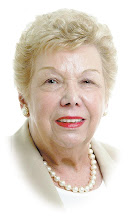
Somewhere 9/11 terrorists smile when we tear at one another

I have probably spent more time researching and thinking about this column than any other that I have written.

On 9/11, a horrific incident that united all of us ... young and old in every state and yes, of every color and religion, has now become a politically wielded wedge to drive us apart. The question of an Islamic center a few blocks from the former site of the World Trade Center is certainly of major importance, but the misinformation, hysteria and use of this one topic as a new litmus test for political candidates is a worrisome trend; sure to worsen as we approach the ninth anniversary of that day.

There has already been far too much over-the-top rhetoric and patriotic posturing instead of some understanding dialogue.

My husband and I both formerly worked for companies headquarted in the World Trade Center, so the fall of those buildings was exceedingly personal. Val, on a daily basis until his retirement, had worked on the 83rd floor of No. 2 WTC. I had worked in the Connecticut office of a large firm whose home office was in building No. 1 and had often been present at meetings and to entertain clients at the beautiful Windows on the World restaurant.

My initial reaction when I heard that a mosque was to be built near Ground Zero was an immediate and definitive, “No, it shouldn’t be there!” But after reading and listening to many differing opinions on the subject, I realize my first reaction was purely emotional, and I am now admittedly somewhat conflicted.

I have learned, for instance, that what is planned is really a cultural center with a pool, gym, cooking classes and activities for the community (although there certainly will be a place for Muslims to worship, as well). There is actually a small mosque nearby, already. Additionally, there are other “inappropriate” buildings in the area, like a strip club, but nobody seems upset about that or even the fact that after all this time, there is still no memorial to those (including some Muslims) who lost their lives that terrible day.

And if “appropriateness” is reason enough for impassioned protest, then the fact that Glenn Beck, who incites racism under the guise of civil rights, had a rally on the fourth anniversary of — and in the same place as — Martin Luther King’s “I have a dream” speech, should have caused a major outcry.

Both Europe and America are becoming increasingly multi-cultural and multi-religious, and yet few of us know or even want to learn about the other cultures and religions which are flowing into mainstream America.

The WTC disaster was caused by a group of extremists who were Muslims, but by reacting with hate crimes, violence and prejudicial treatment, we unwittingly give strength to Osama Bin Laden’s claim that the West is at war with Islam, and it is the duty of every Muslim to resist.

Unfortunately, terrorism does work. Even though there were 600,000 Muslim residents in New York and its suburbs before 9/11, most of us were blissfully unaware of Islam. Remember how after Pearl Harbor, so many people felt that all Japanese Americans were disloyal that these citizens were hustled out of their homes, and placed in “camps” even though many of them had relatives and children serving in our armed forces?

Whether a bomb at Pearl Harbor or planes destroying the towers, we are all too ready to hate and to paint everyone with the same brush. Do we need to be concerned with where the money is coming from to fund the center?

Of course, but we need a lot more transparency in who funds many of our institutions as well as our candidates for political office. It is interesting to note that the second largest stockholder in the News Corp., owners of Fox News, The Wall Street Journal and the New York Post, is Saudi Prince Alwaleed bin Talal, who has donated substantial sums to projects led by Imam Feisal Abdul Rauf, who wants to build the Islamic community center under discussion.

In summary, do I feel the Cordoba Center has every constitutional right to be built on property purchased in 2009? Without a doubt, it has. Daisy Kahn, executive director of the American Society for Muslim Advancement, says the center is meant to improve interfaith relations.

Do I wish in the interests of fostering good will and understanding that they would be sensitive to the emotional associations of 9/11 and decide to build their community center on another site? Yes, I do, and along with many others, would applaud them for making that thoughtful decision.

Contact Jean Cherni, founder of the retirement advisory service, Senior Living Solutions, at jeancherni@sbcglobal.net or 15 The Ponds at Hotchkiss Grove, Branford 06405.

Mom never forgot the women who struggled so that she could vote

Sometimes, when we read about the dishonesty and greed of many politicians or listen to the mud-slinging and false accusations that seem to be part of every campaign, we become discouraged with our political system and a few of us may even decide not to bother voting.

One of my earliest and most vivid memories is of accompanying my mother when she went to vote. She told me about watching the women suffragettes in England who were thrown into prison when they were marching to gain voting privileges.

“If you, as a woman, ever fail to vote, you betray all those courageous women who worked so hard to obtain the right,” she said. This past Thursday marked the 90th anniversary of the day the suffrage battle was finally won here in America. And what a long, hard battle it was: It took the women’s suffrage movement more than 70 years to get the 19th Amendment added to the Constitution.

In America, it began in 1848 in Seneca Falls, N.Y., when 68 women and 32 men signed a Declaration of Sentiments, a set of 12 resolutions calling for the equal treatment of women and men under the law and voting rights for women.

One woman who attended that convention was 19-year-old Charlotte Woodward. When women finally won the vote, she was the only participant still alive.

Meanwhile, in 1792 in England, Mary Wollstonecraft had published “A Vindication of the Rights of Women,” and in 1903, the Women’s Social and Political Union formed in England to fight for voting rights, led by Emmeline Pankhurst.

Many of these demonstrators were jailed and when they staged a hunger strike, were force fed. In England, the right to vote was granted to women at age 30 and above in 1918 and finally lowered to age 21 in 1928.

In America, although the Equal Rights Amendment was drafted in 1923, it lay dormant for about 50 years. It was opposed by a well-organized anti-suffrage movement which argued that most women didn’t want the right to vote and weren’t qualified to exercise it, anyhow. The women used humor to fight back and in 1915 Alice Miller wrote:

Why We Don’t Want

Men to Vote

-Because man’s place is in the army

-Because no manly man wants to settle any question otherwise than by fighting about it.

-Because if men adopt peaceable methods, women won’t look up to them.

-Because men are too emotional to vote. Their conduct at baseball games and political conventions shows this.

Suffragists took their fight to the states and by 1916, women had the right to vote for the president in 11 states. This same year, Jeannette Rankin of Montana became the first American woman elected to the House of Representatives; even though her fellow women would not be able to vote nationally for four more years.

It is interesting to note that although the fight for equal rights started in the East, Colorado, Utah, Idaho, California, Kansas and Arizona were the first states to give women the franchise. And, as far back as 1862, some Swedish women were able to vote in local elections. Women in New Zealand, Australia, Finland, Norway, Denmark, the U.K., Russia, Belgium and the Netherlands were all able to vote before women in America. France, that bastion of liberty, did not grant women the right until 1944, only three years before the women of Japan.

During World War I, when women worked in the factories to help, President Wilson began to support women’s suffrage. He said, “We have made partners of the women in this war. Shall we admit them only to a partnership of suffering and sacrifice and toil and not to a partnership of right?”

In 1919, Congress passed the 19th Amendment and 35 states quickly approved it, but it needed one more state’s approval to be ratified. All eyes turned to Tennessee, the only remaining state where it had a chance.

It is a delicious footnote to history to learn that a young legislator, 24-year-old Harry Burn, had voted with the anti-suffrage forces to that time. But a letter from his mother, urging him to vote for the rights of women, convinced him to change his mind. And so on Aug. 26, 1920, the 19th Amendment became law.

Voting remains one of the most cherished rights and fundamental responsibilities of citizenship.

Contact Jean Cherni, founder of the retirement advisory service, Senior Living Solutions, at jeancherni@sbcglobal.net or 15 The Ponds at Hotchkiss Grove, Branford 06405.

Slowly but surely, we're learning to live with less

Unbridled spending and conspicuous consumption are no longer popular. Even if you or someone in your family is not one of the unlucky members of the long-term unemployed, the general economic uncertainty both here and abroad has created a renewed interest in cutting expenses and returning to the “simple life.”

If your stock portfolio has sunk to new lows, it may offer some small comfort to learn that the 10 richest Americans lost a combined total of 39.2 billion this past year. But it is not just wealthy Americans who are saddled with too many things.

Thanks to my daughter, I was introduced recently to a remarkable online video, “The Story of Stuff,” by Annie Leonard, which has now been viewed by millions worldwide.

Annie says that Americans spend most of their dwindling leisure time either watching television or shopping. She makes a convincing case for the production and disposal costs of our “stuff” in health and environmental problems. You can watch the 20-minute video at www.storyofstuff.com.

Another interesting website called “The Great American Apparel Diet” was formed by a group of women and two men who are attempting to completely eliminate new apparel from their diets for one entire year. Even though there is a footwear and accessories loophole, this is still a difficult assignment.

Like most women, they are attached to their wardrobes, and buying something new is as natural as a chocolate pick-me-up. The ages of this group ranged from 19-60 and their reasons for joining were varied. Some have lost their jobs or made career changes and want to cut their spending, while others are tired of consumption and are concerned about the environment.

One member said she had enough clothes to last a lifetime, but always feels she never has enough and needs to learn to live with what she has. Another member felt she spends too much time thinking and talking about clothes.

I certainly applaud their efforts. I think I could manage it, provided I could engage the accessories loophole. I am, admittedly, a pocketbook collector and have a vast assortment in all shapes and colors. However, research shows that the money spent on experiences such as vacations, sports or leisure activities brings the most lasting pleasure.

Additionally, saving for and anticipating these events increases our happiness, as does sharing experiences with friends and family.

Following are some additional tried-and-true methods to help you save:

-Ask for senior or other discounts wherever you shop. They are often available, but not offered unless requested.

-Refinance your mortgage if you can reduce your interest rate. Also, if you have at least a 20 percent cushion, you can get rid of PMI insurance.

-Look for free checking accounts and credit cards that offer rewards.

-Pay all credit card bills promptly. Never pay interest.

-If using a credit card is too tempting, only pay in cash.

-Combine cable, Internet and phone service for savings.

-Cut out cable channels you really don’t need or watch.

-Rent DVDs from the library or use Red Box at your grocery for $1 per night.

-Share magazines with your neighbors.

-Use newspaper and Internet coupons.

-Shop thrift stores and garage sales for used items that you need. No impulse buys.

-Stop smoking.

-Track expenses for two to three months and see what you can cut out.

-Buy out-of-season and take care of what you have so it will last.

-Don’t shop without a plan or when bored. Instead, go to a museum, a talk at your library or one of the many free events in your area.

“I have learned to seek my happiness in limiting my desires rather than attempting to satisfy them.” — John Stuart Mill

Contact Jean Cherni, founder of the retirement advisory service, Senior Living Solutions, at jeancherni@sbcglobal.net or 15 The Ponds at Hotchkiss Grove, Branford 06405.

If you've got a bit of room left on your summer reading list

Although many people prefer winter as the time to curl up with a good book, I find I often catch up on my reading during the summer. Winter weather invigorates me, and I become involved in projects; while summer makes me lazy and more inclined to relax in a lawn chair, or curl up in air-conditioned comfort with book in hand if it’s as unbearably hot as it has been this past month.

For some reason, I seem to favor biographies or nonfiction, and for those of you whose taste runs along similar lines, here are a few selections I particularly enjoyed:

-No. 1 on my list and one of the most outstanding books I’ve read in a long time is “The Immortal Life Of Henrietta Lacks,” the amazing but true story of a poor, African-American woman whose unique cancer cells provided science with many of the most important medical discoveries of the past 100 years.

It is also the story of author Rebecca Skloot’s determined search for the story behind the amazing HeLa cells. Skloot is a scientific journalist, but she creates a story as exciting as any novel while raising some important bioethics questions. I couldn’t put this book down.

-No. 2 “Half the Sky” by Nicholas Kristof and Sheryl WuDunn. Kristof has been one of my favorite writers ever since he started reporting for The New York Times. Always a fighter for the poor and oppressed, he has become especially passionate about the oppression of women in the Third World.

This book, written with his wife, is about individual women who are responding in a grass-roots way to gender-based violence. It is a testament to the strength and resilience of women who, despite the odds, never give up. It is an inspiration and a call to arms for the rest of us to help those fighting injustice.

An important book about saving the world, one woman at a time. The title is from an old Chinese proverb, “Women hold up half the sky.”

-My third choice is “Making Toast” by Roger Rosenblatt, a small book that makes a big impression. It is a memoir about his daughter, Amy, who at age 38, died suddenly, leaving her husband and three young children.

Rosenblatt writes in an understated way, but with wit and feeling about how he and his wife move into their daughter’s house and take over the terrifyingly difficult work of filling the void in the children’s lives while trying to come to terms with their daughter’s death themselves.

The title, “Making Toast” comes from the one job that Rosenblatt is able to accomplish to everyone’s satisfaction. When one of the children asks, “How long are you staying, Boppo?” ... he responds, “Forever.”

His book is a tribute to the beauty and strength of a family’s devotion.

-And my last recommendation, even though I am only three-quarters of the way through, is “Perfection” by Julie Metz, a piercing memoir of her discovery of her husband’s deceptions while she was still grieving over his loss.

The book sheds light on certain types of individuals who can be charming and exciting and seem self-confident, but in reality are in constant need of reassurance and admiration. Her recognition that her life before her husband’s death was not what she thought, her struggle to retain some of the good of her marriage while putting her life back together, is another “hard-to-put-down” read.

While it is not my intention to start another “Oprah” book club, I would be interested to hear from readers of this column about their recent favorite books.

If one or two books turn up on everyone’s list, I’ll mention them at some future time.

Contact Jean Cherni, founder of the retirement advisory service, Senior Living Solutions, at jeancherni@sbcglobal.net or 15 The Ponds at Hotchkiss Grove, Branford 06405.