Is it me or do the years seem to be racing by faster and faster?

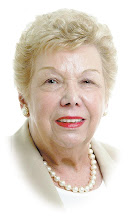
Today is the birthday of the sweet daughter I so eagerly welcomed 10 years after my two rambunctious boys. How can my “baby” be in her mid-40s? What’s more, this past week, your Senior Moments columnist marked the beginning of her 85th year. Who?? Me!!!!!!! What happened to my 50s, 60s and 70s?

I know I enjoyed them, but who suddenly sent the time clock whirring so fast? Some people review the past year and their accomplishments (or lack thereof) at the new year. I always seem to review the past year and set new goals for myself on my birthday.

Looking at last year’s goals, I did accomplish two of them, but one of those was by sheer luck; my own efforts had very little to do with it. One of last year’s goals, to write a book, is being carried over to this year. I feel a bit ashamed about that and worried too; at this age, you can’t keep “carrying over” goals … there simply isn’t time.

One of the tricks to help accomplish a goal is to announce it to everyone (which I just did courtesy of this column), so now it is not just a silent wish but a public pronouncement. Another way to trick yourself is to set mini-goals locked into a definite time schedule.

That way, habit helps to replace sheer willpower, and you also have mini-achievements to celebrate along the way. And when you achieve something, even if it is small, I think it is perfectly OK to gloat and praise yourself (just do it silently). Val is no longer here to keep me on track and cheer me on, but friends who believe in you can serve as excellent coaches, especially when you hit a “down” period, and whether it is sticking to a diet, saving money or finding a new job, we all hit down periods when we are ready to give up.

In addition to staunch friends, you can also give yourself a pep talk; enumerating the things you have accomplished and reaffirming why it is important that you achieve this particular goal and the rewards it will bring. Of course, in setting goals, we need to be realistic.It is important to believe in yourself, but you also have to know your own limitations … and that’s tricky. If you always think too negatively about your own abilities, you will become discouraged before you even reach first base. Better to be a positive thinker and optimistic; even if you fall a little short of your goal, you will still have accomplished something. The most difficult step toward any goal, is, of course, that first step … just starting and now that I have publicly shared my goal with you, dear faithful reader, I can already sense a kind of positive, emotional force that will help to propel me forward.

Incidentally, for those readers who don’t use birthdays to set goals, you may want to keep a copy of this column and reread it on Jan 1.

“We are what we repeatedly do. Excellence, then, is not an act, but a habit.” — Aristotle

Contact Jean Cherni, certified senior adviser for Senior Living Solutions and Pearce Plus, a helpful, full-service program for seniors contemplating a move, at jeancherni@sbcglobal.net or 49 Rose St., Apt. 510, Branford, 06405.

MasterCard rolls out the brave, new ‘Future of Shopping’

Recently MasterCard held a conference in New York for investors called “The Future of Shopping.” Their vision, soon to be tried out, is of a shopping paradise where everything is instantly available, straight from an appealing magazine or television advertisement to your home.

See something, tap on the shopping-cart icon on the page or on the screen, and almost-instant gratification is yours.

Paydiant is creating a program for scanning a code from a television screen which redeems a coupon so you may instantly buy something seen in a commercial or perhaps even featured on the television show, itself. Peapod, the online grocery service which then delivers groceries to your door (available in this area through Stop & Shop) has a new feature on its mobile app so that customers can restock their shelves by scanning bar codes with their smart phones at home. 

As you are munching on the next-to-last cookie in the box, just take out your phone, scan the bar code and the order goes straight to the store. No need for shopping lists; you will never run out of anything. I wonder, however, isn’t there a line between convenience and instant gratification that is crossed when it becomes so easy to spend money without having to pause to consider or reflect, even for a moment? And doesn’t the increased use of icons and apps mean we become increasingly dependent on the ever-changing latest technology?

MasterCard is making this click-through shopping technique available in several areas, including television, video and movies. Gary Lyons, an executive with MasterCard, feels consumers will want to buy what they want from within the content without having to leave the content, meaning if you are watching a television show and the actress is wearing an attractive dress, you can order it on the spot, or if you are at the movies and see the perfect shirt for your husband, you can pull out a device and order it then and there.

At the Future of Shopping Conference, attendees could test out a virtual 3-D fitting room app that takes a photo of a shopper and then, given her measurements, creates an avatar to “try on” clothes so that the mobile shopper can see how they might actually look. Or using Goggle Glass (the latest craze at the designer fashion shows) which are eyeglasses that are mini-computers, the wearer can find, order and pay for, a variety of items with a simple tap on the frame of the glass.

Lyons, who feels the potential of these types of new devices is endless, says, “We’re not trying to force people to buy things to drive them into debt, but to make people’s life easier.” Why do I wonder if that is a sincere statement?

Lyons even foresaw the day when refrigerators could be programmed to send a store an order when milk or eggs are almost gone or washing machines could order detergent. While all of this “immediate-gratification shopping” is relatively new, it will certainly change the relationship between advertisers, consumers and merchants.

When I made a major move recently, I found that many of the home furnishings which I wanted to purchase, were only available online. This may have allowed the store to carry a larger selection while paying for less floor space as well as smaller inventories, but it meant that I could not actually see, touch and feel before buying and often had to assemble the purchase, as well.

The question we, as consumers, have to resolve and then make our opinions heard, is, are super convenience and instant gratification worth the price and the hidden, unforeseen disadvantages? As for me, I have some serious doubts.

Contact Jean Cherni, certified senior adviser for Senior Living Solutions and Pearce Plus, a helpful, full-service program for seniors contemplating a move, at jeancherni@sbcglobal.net or 49 Rose St., Apt. 510, Branford, 06405.

Coalition for Senior Medication Safety in New Haven helps with managing the meds

The Coalition for Senior Medication Safety says medication misuse causes needless sickness, even death; and wants us to know that managing our medications properly is serious business.

The Coalition, based at the Consultation Center in New Haven, recently completed a year-long study, which is part of an ongoing campaign on medication safety funded by the Agency on Aging of Southern Central Connecticut and the Connecticut Department of Mental Health and Addiction Services. The Coalition, led by gerontologist Donna Fedus and pharmacist Sean Jeffery and comprised of representatives from pharmacies, social service agencies, hospitals, home-care organizations and consumers, developed an educational campaign with the goal of promoting senior medication safety.

With the help of seven cooperating senior centers and housing facilities where the average age of participants ranged from 55 to older than 85, participants were asked a series of questions about their medication usage. Most participants took 5 prescriptions and from 2-10 nonprescriptions daily, and only 15 percent of those surveyed received help with their meds (not surprising since 68 percent of those surveyed live alone.)

One of the questions on the survey, which also was an educational goal, had to do with having everyone carry on their person a complete and up-to-date list of all their medications. On a personal level, this made me recognize the wisdom of my own cardiologist, Dr. Steven Jacoby, who at regular intervals has asked me to bring in all the actual bottles and blister packs of everything I am taking, and he makes sure they are in the correct amount, not expired, and that there are no conflicting ingredients.

Follow up questions were later asked of the same groups, with improved results in their medication management. The Coalition suggests that even if you don’t have a particular question, review your medication, the type and amounts, prescription and nonprescription, and then talk all of these over with your doctor; either during your annual checkup or make a special, separate appointment.

I learned some additional good pointers at the recent Connecticut Health conference from Shelia Molony of Connecticut Community Care:

DO’S
Keep A Record (All medicines and vitamins, supplements, and over-the-counter meds.)nAsk Questions — Make a list for your health-care provider and ask your pharmacist.nSome good questions for your doctor are Why do I need this medicine and are there any alternatives? What are the risks and benefits? What are some side effects? What should I do if I miss a dose? How do I take this medicine? With food? At a certain time of day? nPartner with your healthcare provider. Follow directions carefully and share any symptoms such as dizziness, change in appetite or sleep, fatigue, etc.nRead Labels. When you refill the prescription and before taking medicine. You can request large-print labels or information sheets. Use caution with over-the-counter medicines;read the warnings, dosage and expiration dates.nAvoid Problems. Use one pharmacy. Use organizers and reminders such as charts or pill boxes. Ask for easy-open-caps (if no children come into your household).

DON’T
Take more or less medication than prescribed.nStop taking antibiotics before the full prescription is finished.nSuddenly stop a medication without checking with your doctor.nStore medications in the bathroom.nMix alcohol and medication without first checking with your healthcare provider.nBorrow, loan or share medications.

Finally, two helpful websites are Medline Plus where you can learn all about your prescriptions and over-the-counter meds and the Consumer Reports site that details the best buys in drugs. That site is www.consumer reports.org/health/best-buy-drugs/index.htm

Questions or information re: the Coalition for Senior Medication Safety, should be directed to Donna Fedus, director of elder programs, at the Consultation Center, Yale University School of Medicine, 203-789-7645.

Contact Jean Cherni, certified senior adviser for Senior Living Solutions and Pearce Plus, a helpful, full-service program for seniors contemplating a move, at jeancherni@sbcglobal.net or 49 Rose St., Apt. 510, Branford, 06405.

Cancer survivor ‘e-Patient Dave’ has a bit of advice for all of us

“Healthcare is not a spectator sport,” according to “e-Patient Dave” a cancer survivor and fascinating speaker and author. An “e-Patient” is a patient who is empowered, engaged and enabled. When Dave deBronkart was diagnosed with what the doctor thought was terminal kidney cancer, he was determined not to be a passive patient. He collected whatever information he could find online about his condition and possible treatments. He shared it with his online readers and his doctors, consulted parts of his own medical records online and, through his doctor, found a good online patient community where he got invaluable advice and emotional support from his patient peers. Dave narrowly escaped death, saved by a rare treatment, many never hear about, but happily was effective for him. Out of that experience, came a book and a mission in life to empower patients. The old model of the authoritative doctor needs to be replaced by a partnership model. The reality is that there were 800,000 new articles published in medical journals in 2010, so not even your doctor can possibly know everything.

Patients and their families (who are also the caregivers) need to understand a disease or a treatment, and they need to feel free to ask questions. New regulations will make access to our records a reality. Last year in a study called Open Notes involving three leading medical centers, patients were given unrestricted access to their physicians’ actual notes. Not only did 89 percent of the patients love it, they said it would definitely affect what health provider they would choose.

In answer to some experts who say, “Patients don’t understand this stuff,” Dave responds, “It’s perverse to keep people in the dark and then call them ignorant.” Patients and families can also help with quality and safety. They can check the chart and the meds being given, they can request that all who enter the room, wash their hands, and they should inquire about how much things will cost. Dave says there is a magic incantation we should say to all doctors we visit: “I’m the kind of a person who likes to understand as much as I can about my health. Can I ask some questions?” In his book, written with Dr. Danny Sands, Dave’s primary care physician, the authors say there is a wealth of online health information, but we need to learn how to identify good vs. bad websites using guidelines such as MLANET— The Medical Library Association website. (See their MLA User Guide to Finding and Evaluating Health Information on the Web.) Government departments of health also have excellent information. (MedlinePlusgov). Also Kaiser, the Veterans Administration and Mayo Clinic. The book also cautions that although nobody wants to talk about it, medicine can be dangerous. It is risky to cut someone open, and it is risky to put potent chemicals (medicines) in our bodies. In the best hospitals in America, 1 in 20 surgical patients die of a complication. In the worst hospitals, it’s 1 in 6. With this in mind, you might be inclined to ask about other options. Dave feels that people perform better when they are better informed.

He has part of a group that started the Society for Patient Participatory Medicine (http://participatorymedicine.org/), and you can also watch an excellent video of one of Dave’s talks at on.TED.com/Dave. Patient participation should:nImprove outcomesnReduce medical errornIncrease patient satisfactionnImprove cost of care

As responsible adults, let’s all take responsibility for living a healthy lifestyle, and then if medical issues arise, becoming responsible, involved patients.Note to fellow Branfordites: Monday at 6:30 p.m., there will be an important meeting at the Blackstone Library, 758 Main St., regarding the need for a new Senior Center now.

Contact Jean Cherni, certified senior adviser for Senior Living Solutions and Pearce Plus, a helpful, full-service program for seniors contemplating a move, at jeancherni@sbcglobal.net or 49 Rose St., Apt. 510, Branford, 06405.