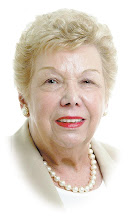
At this age, who couldn’t use a hearing aid

Last year, when my daughter Marianne visited me, she sometimes would say something while in another room, and I would only comprehend every third word, requiring me to constantly shout, What?” or “Wait till I’m in the room with you to talk.”

Never one to be indirect, Marianne told me I really ought to think about getting a hearing aid. Most of the time, in personal conversations, I’ve experienced no problem, but sometimes phone conversations or understanding all of the lines in a theatrical production can prove difficult.

When I had my hearing tested, I was told that my hearing loss was “age appropriate,” whatever that means and that a hearing aid would be beneficial. (Well, of course they think so, they are selling them.) However, I have been doing some serious research on the subject and here’s what I found out:

About two-thirds of adults age 70 and older have hearing loss. After age 80, the percent jumps to 79 percent.

Most important is that recent studies strongly indicate a relationship between hearing loss and declining cognitive function. In fact, in an observational study, baseline hearing loss was associated with 30 to 40 percent greater cognitive decline per year as compared with similar patients without hearing loss.

One of the reasons may be that hearing loss can cause older adults to withdraw socially. When it becomes hard to hear what other people are saying, you definitely feel cut off from those around you.

Another possibility, according to Dr. Frank Lin at the Johns Hopkins School of Medicine, is that hearing loss forces the brain to devote extra resources to processing the “garbled” signals it is getting from the ears. “If you are redirecting brain resources to help with hearing,” Lin explained, “that probably comes at the expense of something else — like working memory.”

Hearing loss is more than an inconvenience or source of embarrassment; hearing represents a critical portal to conversation, a behavior that connects humans to one another socially. Hearing loss creeps up on people “slowly and insidiously,” according to Lin, so it might not be you who notices it, but the people around you. (Certainly true in my case!)

There is often confusion over the terms “hearing impaired,” “hard of hearing,” “deaf” and “deafened.

Hearing impaired is often used to describe people with any degree of hearing loss from mild to profound, including those who are deaf. But deaf usually refers to a hearing loss so severe there is very little or no functional hearing.

Hard of hearing refers to a hearing loss where there may be enough residual hearing that an auditory device provides adequate assistance to process speech.

Deafened usually refers to a person who becomes deaf as an adult and, therefore, faces different challenges than those of a person who was deaf at birth or became deaf as a small child.

AND NOW FOR SOME REALLY GOOD NEWS

I have found and tested a special and helpful phone called Caption Call, which, when you answer your phone, simultaneously displays the entire conversation on a screen which is part of the phone. I keep it next to my regular phone and use both. It is the most helpful accessory since my GPS. And best of all, if you have Internet service (needed for the connection) it is absolutely free. It is subsidized and paid for by a small tax we all pay on our phone bills (Who knew?) and you are entitled if you are even slightly hearing impaired.

It almost sounded too good to be true, so after I heard about it a few months ago, I waited, got mine installed and have been using it for almost eight weeks before feeling I could tell readers about it. Find out more at CaptionCall.com or 877-557-2227 where you may also put in an order.

Contact Jean Cherni, certified senior adviser for Senior Living Solutions and Pearce Plus, a helpful, full-service program for seniors contemplating a move, at jeancherni@sbcglobal.net or 15 The Ponds at 101 Hotchkiss Grove, Branford 06405.

National Community Pharmacists Association: Taking medication properly seems like tough pill to swallow for many

“Take only as directed” is easier said than done.

According to the National Community Pharmacists Association, as many as three out of four Americans don’t always take prescription medicine as directed. Improper use of medications is especially prevalent among older adults where many, between the ages of 57 and 85, use at least five prescriptions as well as over-the-counter medications.

Seniors living alone sometimes forget to take medication and then either “double up” or skip a needed dose. Sadly, sometimes, an important medicine is eliminated because it is just too expensive. One of the major causes of emergency room visits is due to improper use of medications.

To help to correct this potentially life-threatening situation, the Coalition for Senior Medication Safety is launching an educational campaign beginning at eight New Haven senior centers and senior housing complexes which will be provided with literature, presentations and pharmaceutical assistance for their members and residents.

Participating in this initial effort are the Dixwell, East Shore and Atwater senior centers and residents of Bella Vista, Tower One/Tower East, Fairbanks Apartments, Whalley Terrace and Casa Otonal.

A contributing cause to medication errors are lengthy and confusing instructions which sometimes accompany a new prescription. The Food and Drug Administration is planning to test single-page consumer information sheets that would replace multipage package inserts. FDA officials say that inadvertent errors made by patients who misunderstand information are causing significant harm.

One reason cited is literacy skills. Patients better understand simple language like, “Use only on your skin” instead of “For external use only.” Picture icons were also found to be helpful. However, with complex medication regimens and multiple chronic conditions, even highly educated consumers can fail to take medications correctly.

Under some of our newer health care laws, hospitals are being held to account and penalized for readmissions that occur in a short time frame following a discharge. Since many re-admissions are due to prescribed medicines taken incorrectly and causing an adverse reaction, education about how to avoid misuse is especially important. Here are a few simple rules to remember:

-Obtain medical advice before taking nonprescription drugs, vitamins, supplements or herbal remedies; some could affect the action of your regular medication.

-Be sure you understand all instructions before leaving the pharmacy. Pharmacists are taking a more active role on the health-care team and are helping to counsel patients. Pharmacies like Towne in Branford where owner and pharmacist Karen Ragonese offers individual expertise to many longtime customers, can be especially helpful.

-Never take anyone else’s medication. Check and follow the expiration date on your own meds.

-Keep medications out of the reach of children and in a nonhumid environment; usually, the bathroom is not a good place.

-Use a daily pill dispenser (some even feature timer reminders) to help you stay on track.

Note: The Coalition for Senior Medication Safety is comprised of more than 20 organizations and individuals that serve older adults in New Haven. For additional information, contact Donna Fedus at 203-789-7645.

Contact Jean Cherni, certified senior adviser for Senior Living Solutions and Pearce Plus, a helpful, full-service program for seniors contemplating a move, at jeancherni@sbcglobal.net or 15 The Ponds at 101 Hotchkiss Grove, Branford 06405.

Car shopping, chapter 2: He had me at 'heated leather driver s seat'

To any of my readers who have succumbed to temptation and bought something when they were “just looking,” it will come as no surprise to learn that, although only two weeks ago I was “just looking” at new cars, I am now the owner of an ice-blue Honda CRV, which I have named Bonnie after Scarlett O’Hara and Rhett Butler’s daughter, Bonnie Blue Butler.

Although my purchase wasn’t completely spur of the moment, as I had practiced due diligence and checked on prices and reliability, I wasn’t really thinking of purchasing for several months.

I had narrowed down the choices to either a Honda or a Subaru after also considering Toyota and Hyundai. As someone who has been in one form or another of sales and sales training most of my life, I found it interesting although somewhat disheartening to find that almost all of the salespeople I came in contact with, although courteous, did not take the time, initially, to find out the driving needs and car features that might be important to me.

I was looking for ease of entry, safety features, good visibility and comfort on long drives. One salesperson jumped right in and was extolling the virtues of the large cargo space. Now, how many single women in their 80s are lugging home lumber or furniture? My usual quart of milk, TV dinners and some cat litter require very little room.

Visiting the Honda dealership in Branford, I was disappointed when the saleswoman informed me rather coldly that all the 2012 models had been sold and immediately started to push the more expensive 2013s.

Although technically knowledgeable, she also kept saying, “No problem” every other sentence, which I found annoying. While previously looking at Toyotas in Westbrook, I had visited the Honda dealership across the street and found the salesman, Don Shepard, to be gentlemanly and helpful.

When I called him, he confirmed that there weren’t any 2012s available, but suggested a 2011 CRV that had all the extras I had requested, very low mileage, and, of course, a big savings from a 2013. I went to look and purchased it that same day as well as trading in my 11-year-old Toyota Avalon.

I almost felt as though I was betraying a trusted, dependable friend, and I do hope the next owner is kind and considerate.

By the time all the necessary paperwork was completed, it was late in the day, and although Shepard had spent a great deal of time explaining all the features of my new car, after driving home at 3 miles an hour and picking up some groceries, it had become dark. I parked the car, but could not find the latch to release the hatch to get my groceries. Trying to read the instruction book by flashlight in the cold, I was wondering what I had gotten myself into, but suddenly my fumbling fingers found the latch, almost by accident.

Another day, attempting to start the windshield wipers, the radio came on at such volume I was nearly blasted out of the car. Now, after a few drives, I’m finally getting past that “first date” like stage and beginning to feel comfortably familiar.

I am really enjoying the smooth ride, automatic headlights, the sunroof and especially the heated leather driver’s seat. A pleasure, too, is the ease with which I can get in and out, and, yes, I admit it, the pride of ownership of such a sparkling new, good-looking vehicle. And, according to Malcolm Gladwell, author of “Blink,” sometimes spontaneous decisions are as good as, or even better than, carefully planned ones.

Contact Jean Cherni, certified senior adviser for Senior Living Solutions and Pearce Plus, a helpful, full-service program for seniors contemplating a move, at jeancherni@sbcglobal.net or 15 The Ponds at 101 Hotchkiss Grove, Branford 06405.

Do's and don'ts of online dating no matter what your age

“Love ... If you have it, you don’t need anything else. If you don’t have it, it doesn’t matter what else you have.” — Sir James M. Barrie

As we all know, there are many kinds of love. Love of our friends, our children, our work, and perhaps most important but hardest of all, respect and love of all our fellow human beings.

But Valentine’s Day, which we will celebrate Thursday, is dedicated to romantic love, to that one very special person in our life. Since finding our “soul mate” seems to have become more difficult than in the past, and because it is also now big business with digital dating services representing the third-largest revenue generator in paid-content websites, your curious columnist did some personal research on the subject.

I joined a senior dating site, but did not want to mislead anyone, so never responded to any of the suggested matches. When I tried to cancel, I ran into major difficulty.

Therein lies my first warning: Be very clear about cancellation policies.

Some people have had success with dating online. I think if you engage in many different activities, you are just as likely to meet someone in a more relaxed, natural setting. However, since experts say that online dating has lost any stigma and newer sites such as eHarmony, Match.com and OkCupid match scientifically, herewith some of their suggestions:

‰You need to stand out. It is important to look different from the other 50 profiles the average person views.

‰Five useless phrases online daters should not use:

“Down to earth.” It is superficial and meaningless.

“I love to laugh.” Who doesn’t?

“I just want a nice guy.” Truth of the matter is, nice guys aren’t very interesting. He needs to have something that is different, a little compelling.

“I love life.” Not helpful. What do you love about life? Give me a look inside your head.

“I can’t believe I’m doing this.” People use this as a way of expressing that they really don’t need this online dating thing. That’s silly and degrades the process.

Dating in your senior years certainly can be complicated because the rules that we were accustomed to no longer hold true.

One new interesting site has a possible answer. Known as YourCauseOrMine, it matches members based on location, their causes and activity and provides a platform for individuals and groups to meet. They claim that members can identify their interest and involvement in various causes, search for profile matches among other members, join groups based on their interests and plan to volunteer with or attend local cause-related events.

The founders, Fred and Teshia Roby, live on the West Coast, and say their own experience served as an inspiration for the site. At the least, you would be put in touch with some interesting groups with like-minded people.

Unfortunately, sometimes Cupid is a scammer. Here is how to avoid a dating scam.

1. Set up an anonymous email account to protect your privacy.

2. Use your cellphone number, which is more difficult to check.

3. Drive yourself to your date, and tell someone where you will be. Your date does not need to know your address.
4. Pay half the bill.

And, of course, never pursue a long-distance relationship with a stranger online or reveal personal data until you have met face to face, checked out the individual and developed a trusting relationship. Never, under any circumstances, send money.

Even though love can be wonderful, keep your head before losing your heart.

Contact Jean Cherni, certified senior adviser for Senior Living Solutions and Pearce Plus, a helpful, full-service program for seniors contemplating a move, at jeancherni@sbcglobal.net or 15 The Ponds at 101 Hotchkiss Grove, Branford 06405.